
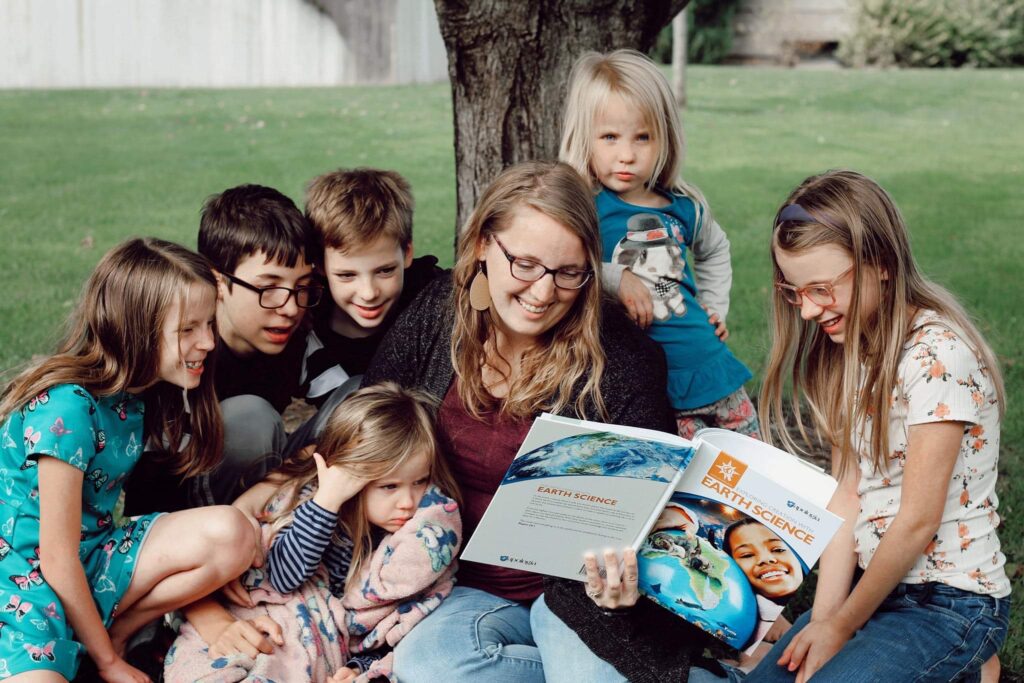
Homeschooling a Child with Dyslexia: Curriculum, Tools & Real Answers
By Katie, Life in the Mundane, second-generation homeschool mom of six
If you’re homeschooling a child with dyslexia, you don’t need another generic list.
You need to know what actually works day to day. I’ve been there: choosing curriculum,
finding tools that don’t make my kid feel “behind,” and learning when to shift from
teaching reading to teaching adapting. Below are the real questions I get asked
most, answered from what’s actually worked in our home, plus links to go deeper.
Disclosure: Some of the links on this page are affiliate links, which means I may earn a small commission if you make a purchase through them, at no extra cost to you. I only recommend resources I’ve personally used and trust.
General Dyslexia Questions
What is dyslexia, exactly, and how do I know if my child has it?
Dyslexia is a language-based learning difference that affects reading, spelling, and sometimes writing, even when a child is bright and has had plenty of good instruction. It’s not laziness and it’s not a vision problem. For a clear, parent-friendly breakdown of what dyslexia actually is and the early signs to watch for, All About Learning Press has a great article on it here. If you’re noticing your child mixing up letters, struggling to sound out words despite a lot of practice, or avoiding reading altogether, it’s worth reading through and considering a screening.
Can homeschooling actually be better for a dyslexic child than traditional school?
Absolutely, it can be better. You get one-on-one instruction, and you get to tailor the curriculum to your child. You can adjust time and expectations, and you get to go at your child’s pace. There’s a well-known finding from the Annie E. Casey Foundation that kids who aren’t reading proficiently by third grade are far more likely to struggle with school long term, in their data, kids in that situation are about four times more likely to not graduate high school on time (source). But third grade isn’t actually a magic cutoff. What happens is that after third grade, there’s a lot less reading support built into the school system, and every subject starts requiring reading to keep up. That’s where kids without support get buried in the work. In homeschool, we can keep offering that one-on-one support past third grade so our kids don’t hit that wall.
Curriculum
What’s the best reading curriculum for a dyslexic child?
All About Reading (aff link) is my top pick for most dyslexic kids. It’s Orton-Gillingham
based, written by a mom of a child with dyslexia, multi-sensory, and built with the heavy
review that dyslexic learners need. If your child needs more support than that, the
Diana Craft Right Brain Reading Program is the other option I recommend.
It’s more teacher-intensive, but it’s tailored specifically to right-brain thinkers, using
pictures and brain-training exercises to connect both sides of the brain. Most kids do fine
with All About Reading; a smaller group needs the extra depth of a right-brain program.
Everyday Tools & Strategies
What everyday tools actually help, beyond curriculum?
- Scribd for audiobook read-alouds. Wider selection than Audible, for less cost.
- Colored reading strips (Dollar Tree). Help some kids track lines and reduce visual confusion. Works for some kids, not others, but worth trying since it’s cheap.
- Snap Words. Sight word cards with built-in visuals. After years of plain flashcards not sticking, these were the first thing that actually worked for memory retention.
- A phonics phone (a small plastic tube, found on Amazon). Pipes a child’s own voice back to their ear so they can hear sounds more clearly while reading aloud. Works better for younger kids.
Adapting & Accommodations
At what point do I stop teaching my child to read and start teaching them to adapt?
That’s honestly a personal decision, and I can’t give you an exact age. What I can tell you
is that minor adaptions, like audiobooks, can be introduced early on. But for bigger
adaptions, I personally found middle school and high school to be a good time for that.
The video below goes into more detail on what those adaptions can look like and how to
introduce them.
What free or low-cost tools help with reading once you’ve made that pivot?
- Audiobooks through Scribd, Audible (aff link), or your local library.
- Bookshare. Free, but requires proof of a dyslexia diagnosis or screening. Uses robotic voice, but unlocks hundreds of books that were never made into audiobooks.
- Learning Ally. Has a cost, but uses real human narration instead of robotic voice, for kids with dyslexia or other learning needs.
- Textbook audiobooks. Pairing the audio version with the physical textbook lets a child follow along and focus on the content instead of decoding the words.
- Speechify (aff link). Free app that reads aloud anything you scan or upload (PDFs or physical pages). The paid version adds natural-sounding narrators and highlights words as it reads, useful for building reading skills while still getting comprehension support.
How do you help a dyslexic child with writing and note-taking?
- Voice recorders for lectures, sermons, co-op classes. Lets your child focus on listening instead of trying to write and listen at the same time.
- Ask presenters for their slides or notes ahead of time or afterward, when possible.
- Teach effective note-taking. Symbols and shorthand reduce the spelling/writing load during live instruction.
- Speech-to-text (built into Google Docs, Apple products, Microsoft Word). Lets kids write papers by voice. Best introduced in middle school (6th-8th grade) so they have time to learn voice commands for punctuation and formatting before high school workloads hit.
- Grammarly (free version works fine). Catches punctuation, spelling, and awkward sentence structure. This is a tool, not a shortcut. Kids still do the thinking; it just removes some of the friction.
Testing & The Road Ahead
What about testing and standardized tests? Can a dyslexic child even go to college?
Yes. A few things make testing more manageable:
- If your state requires standardized testing, consider getting a formal dyslexia diagnosis. Documentation matters more as your child gets older. It’s what unlocks accommodations under the Americans with Disabilities Act, in college and later in the workplace.
- Ask for untimed or extended-time testing, and read-aloud accommodations where available.
- If your state doesn’t mandate a specific test, the California Assessment Test offers both timed and untimed versions, with an optional computer read-aloud.
Go Deeper
This page pulls from full videos with a lot more detail. Worth watching if a section above hit home:
Curriculum Picks for Kids with Dyslexia
When to Pivot from Teaching to Read to Teaching to Adapt
How to Help Your Reluctant Readers
Making Reading Flash Cards Fun: Ways to Teach Sight Words
More videos on this topic:
- Favorite Board Games for Gameschooling (Dyslexia-Friendly)
- 10 Reading Review Ideas for All About Reading
- Best Books for Struggling or Reluctant Readers
Playlists with even more on this topic:
- Homeschooling With Special Needs
- All About Reading
- The Diana Craft Curriculum
- A Homeschool Mom Encouragement Playlist
In my community, Made2Homeschool, you can access these additional workshops:
- Helping Your Dyslexic Learner
- Dyslexia Panel
- Highly Distracted Homeschool Student
- Helping Your Forgetful Learner
- Not Behind, Just on God’s Timeline
Have a resource that’s worked for your dyslexic learner? Share it in the comments on any of the videos above. I’m always adding to this list.
If you have any questions, please feel free to reach out to me on social media or via email at
lifeinthemundane@gmail.com.